Guide · Updated October 14, 2026
Orange stains in well water — iron, manganese, or iron bacteria
Direct answer
Orange on porcelain is usually iron — but clear-water iron, already-rusty water, and slime are three different jobs. Get a certified-lab iron and manganese number, plus the yearly coliform and nitrate pair, before anyone sells a tank. Bacteria or nitrate on that sheet still goes to the local health department.
| What to test | Why | EPA MCL / SMCL or guidance |
|---|---|---|
| Iron | Orange/brown stains and metallic taste. Dissolved iron, already-orange water, and slime are different jobs. | 0.3 mg/L SMCL (aesthetic guideline) EPA secondary standards |
| Manganese | Black-brown stains and dark grit. Not the same tank as hardness. | 0.05 mg/L SMCL (aesthetic guideline) EPA secondary standards |
| pH | CDC annual floor. Low pH is a corrosion clue, not an iron-filter job. | 6.5–8.5 SMCL (aesthetic guideline) EPA secondary standards |
| Total coliform | CDC’s annual floor for a private well. A present result is a pathway warning, not a shopping trip. | Present/absent — any detected coliform is a positive until a clean retest CDC well-testing guidelines |
| Nitrate as N | Same yearly panel as coliform. A result at or above the public-system line goes to the health department. | 10 mg/L as N (EPA public-system MCL) EPA National Primary Drinking Water Regulations |
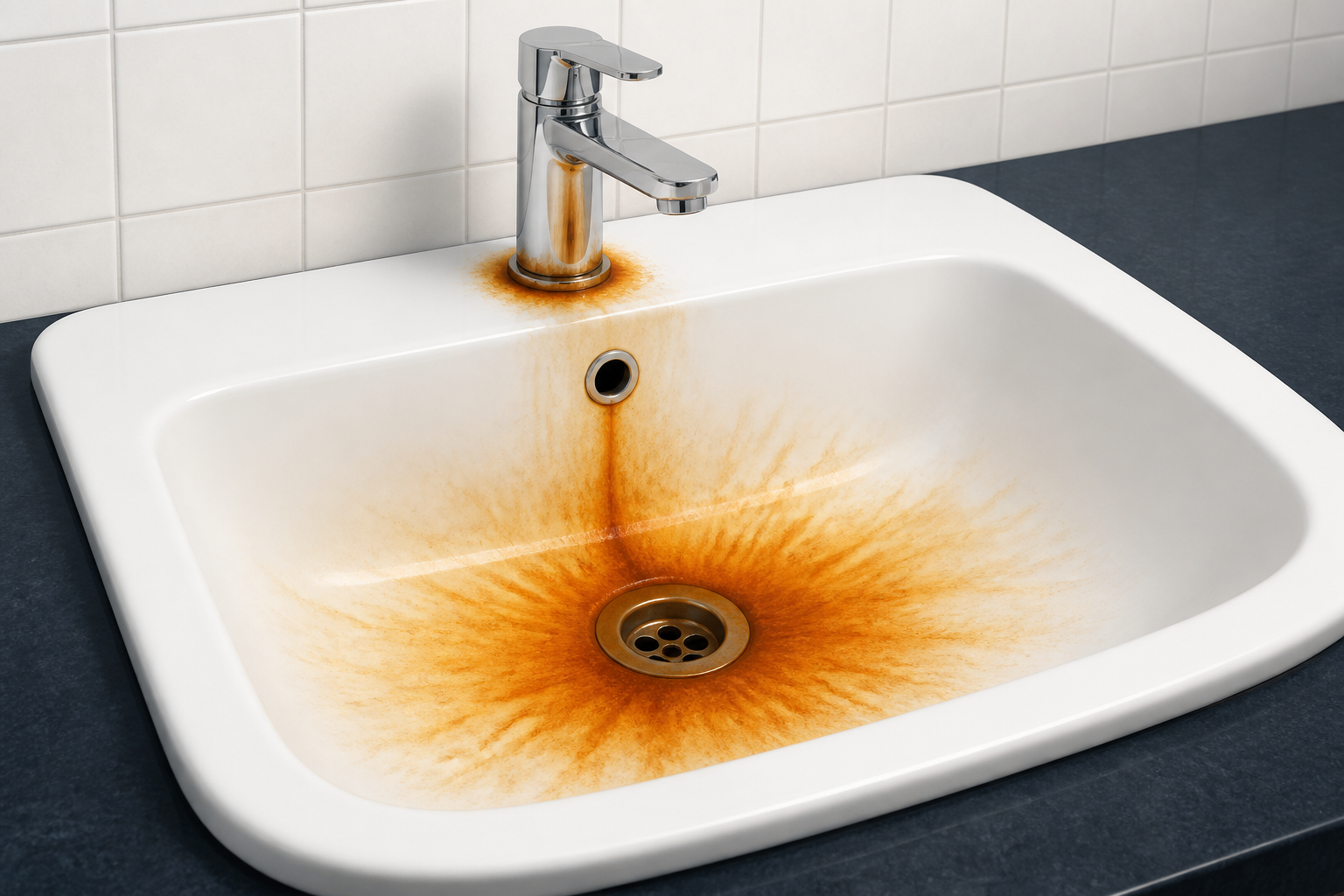
Orange on a porcelain sink is the most common well complaint that still gets the wrong equipment. People say “iron filter” the way they say “Kleenex.” There are at least three different problems that look like rust, and a water softener sitting in the middle of the conversation confusing everyone.
EPA’s secondary standard for iron is 0.3 mg/L. Above that, water can stain, taste metallic, and leave sediment. The secondary standard for manganese is 0.05 mg/L; manganese stains run brown to black. USGS Circular 1332 found iron and manganese outside those aesthetic ranges in a substantial share of domestic wells. So the geology is ordinary. The treatment class is not.
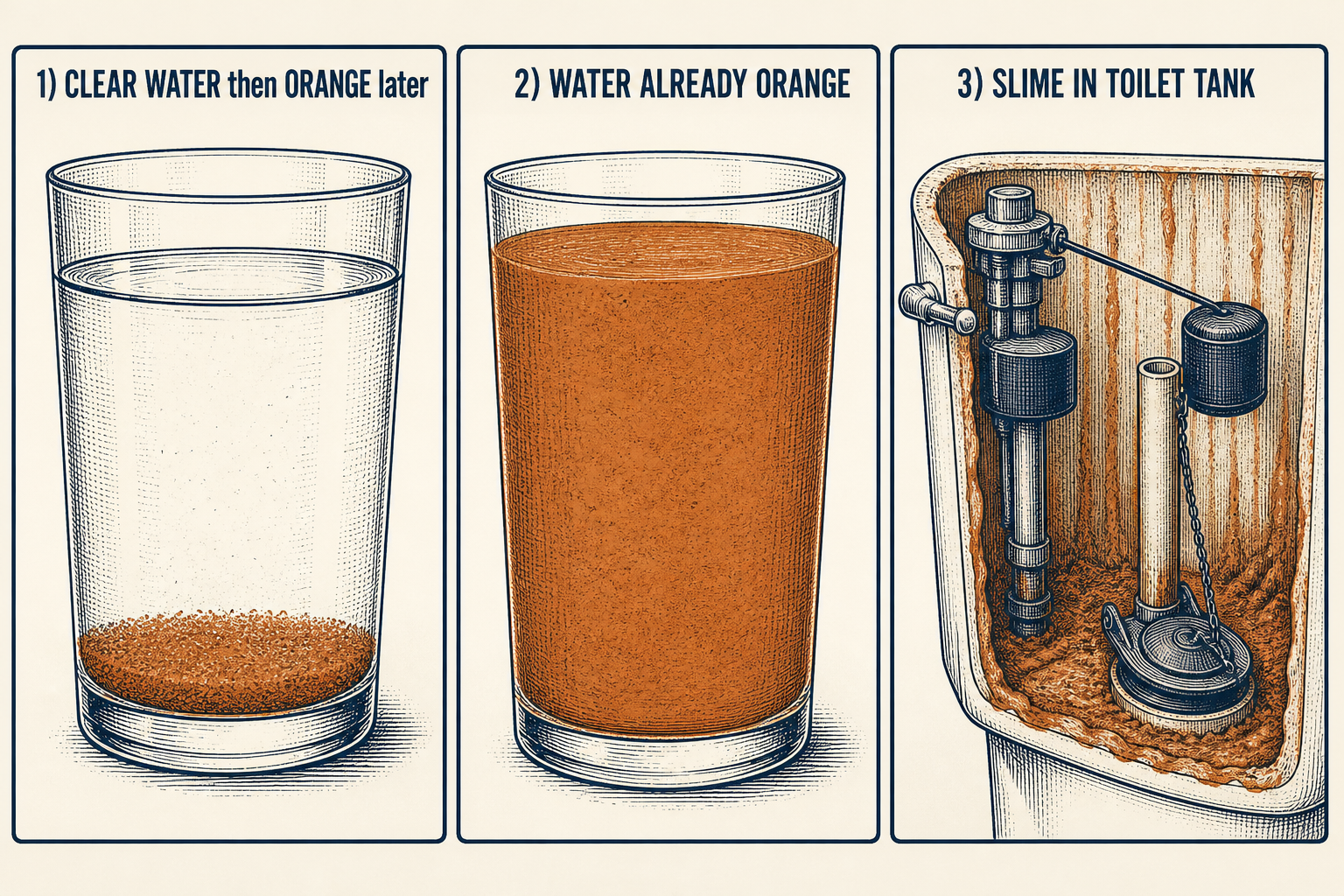
Three orange problems
1. Dissolved ferrous iron (clear-water iron)
The water leaves the tap clear and turns yellow or rusty in a glass, a toilet bowl, or a load of laundry. Oxygen is converting Fe²⁺ to Fe³⁺. This is the case catalytic carbon, manganese dioxide media, aeration-plus-filter, or (at low levels, without bacteria) a softener rated for iron might handle. “Might” depends on pH, competing manganese, and how much iron you actually have.
2. Oxidized ferric iron (red-water iron)
The water already looks rusty or has particles. Something upstream — the well, the pressure tank, an old pipe — already did the oxidation. You need filtration, not a softener. A sediment cartridge will clog. A properly sized oxidizing filter or a dedicated iron filter with backwash is the class.
3. Iron bacteria
Minnesota Department of Health describes this without romance: organisms that combine iron or manganese with oxygen and leave rust, cells, and slime stuck to pipes, pumps, and fixtures. They are not known to cause disease. They can clog a well, cut production, and create places where other organisms grow. MDH tells you to test nitrate and coliform anyway and to keep the well sanitary.
The house test is the toilet tank. Orange, brown, or oily slime on the walls; stringy rust in the bowl; a swampy smell when you have not used water overnight — that is not “high iron” as a dissolved number. It is a biofilm problem. Shock chlorination may knock it back. An iron filter alone will become a farm for it.
Sulfur bacteria can ride along and add a rotten-egg smell. See the H2S guide. Do not assume one tank treats both.
What to put on the lab form
Minimum useful panel when the complaint is orange:
- Iron (ask for dissolved and total if the lab offers it)
- Manganese
- pH
- Hardness
- TDS
- Sulfate (if odor or black stains)
- Total coliform and nitrate (annual, and because slime is a reason to be current)
A color kit from the store is a screen. It will not name bacteria. If you want an iron-related bacteria (IRB) test, ask the lab; many drinking-water menus omit it unless you request it.
Sample untreated water. Sampling after a “well system” that is already in the basement tells you the system lost, not what the aquifer sent.
Where to get the test
Start at certified labs by state. Use a state-certified drinking-water lab for iron, manganese, pH, and the yearly coliform/nitrate pair. Minnesota and Wisconsin already have iron and manganese pages: Iron in Minnesota Well Water, Iron in Wisconsin Well Water, Manganese in Minnesota Well Water, and Manganese in Wisconsin Well Water. The lab inventories for those states are Minnesota and Wisconsin. The same official-search path now covers Michigan and North Carolina. If the toilet tank is jelly, switch to slimy toilet tank. If the stain is blue-green, that is low pH and copper, not iron.
EPA’s aesthetic lines are 0.3 mg/L iron and 0.05 mg/L manganese. CDC’s annual floor is total coliform, nitrates, TDS, and pH. A present coliform or a nitrate at or above 10 mg/L as N still goes to the local health department.
Matching stains to a class
| What you see | Likely class | Usually the wrong class |
|---|---|---|
| Clear water, later orange | Oxidizing iron filter; sometimes softener if iron is low and there is no slime | Carbon-only “taste” filter |
| Water already orange | Backwashing iron filter or sediment-plus-oxidizer | Softener |
| Slime in tank, oily sheen | Well disinfection + sanitation, then filtration; contractor for the well | Another softener bag of salt |
| Orange plus rotten egg | Combined iron/sulfur oxidizer sized for both | “Sulfur filter” that is just carbon |
| Orange plus blue-green | Iron plus low pH; order matters — see blue-green corrosion | Neutralizer after a fouled iron bed, or the reverse without a plan |
| Black grit, brown-black stains | Manganese, often with iron | Iron-only media at the wrong pH |
NSF listings (NSF/ANSI 42 for aesthetic effects, 44 for softeners) are claim-specific. A softener certified for hardness is not certified for 8 mg/L iron because the box is orange.
Softener myths
A cation-exchange softener can pick up a small amount of ferrous iron. Dealers quote “3 ppm iron removal” the way brochures quote horsepower. That rating assumes clear-water iron, no ferric particles, no bacteria, enough salt and resin, and a dealer who will admit when the water is outside the rating. When the resin fouls, you have a heavy, stinking tank and the stains come back.
If hardness is also high, the correct design is often iron/manganese treatment first, softener second. That is a sequence, not a combo special. Details live in iron filter vs. water softener and treatment order.
Iron bacteria is a well problem first
MDH’s prevention list is dull and correct: do not pour pond water down a well to prime a pump; keep the cap sanitary; disinfect after repairs; keep the casing above grade. If the well is already slimy, a licensed well contractor may need to mechanically clean it. Chlorine is cheap and does not always reach the biofilm. Repeating a jug-of-bleach ritual while leaving the slime in the toilet tank is how people spend a year.
NGWA’s contractor lookup on Wellowner.org is a membership directory. Verify state licensing yourself. NGWA does not guarantee the work.
After the well is cleaned, then size the house filter for the remaining dissolved iron. Doing it backwards coats the new media in the first month.
What not to claim
Iron at staining levels is an aesthetic and plumbing problem. This page does not say iron in drinking water is harmless for every person, and it does not say iron bacteria are a pathogen. MDH’s line is the right one: not known to cause disease; test the health parameters anyway.
If coliform or nitrate fails, the orange stain is the less important sentence on the page.
Brands are not classes
When you are ready to compare hardware, use manufacturer catalogs — not rankings. SpringWell, US Water Systems, and Pelican: official URLs, application pending. SoftPro: tracked catalog link (see disclosure):
Well Diagnosis may earn a commission if you buy through an approved affiliate link on this page. That does not change the price you pay. See the disclosure.
Look the exact model up in the NSF DWTU search. If the listing does not mention iron, the photos of orange sinks on the product page are advertising.
Bottom line
Orange is a clue. The class is dissolved iron, already-oxidized iron, manganese, iron bacteria, or a stack of those. Test untreated water. Do not put a softener on slime. Clean the well if the tank is jelly. Then pick an oxidizer or a filter that matches the milligrams, the pH, and the flow you actually use at 7 a.m.
State pages and the labs hub
Related
Sources
- 1.U.S. EPA. Secondary Drinking Water Standards: Guidance for Nuisance Chemicals.
- 2.U.S. EPA, Private Wells. Protect Your Home’s Water.
- 3.U.S. Geological Survey. Quality of Water from Domestic Wells in Principal Aquifers of the United States, 1991–2004 (Circular 1332).
- 4.Minnesota Department of Health. Iron Bacteria in Well Water.
- 5.NSF. Search NSF Certified Drinking Water Treatment Units.
- 6.Wellowner.org / National Ground Water Association. Find a Contractor.